During MLK weekend in January 2026, I watched Liberation, Revenge Life, Jet Black Productions, and Uproar Parties each put together circuit parties. They were creating events for audiences with a lot in common, but the weekend felt fragmented. To see everything happening, guests had to piece together posts and links from different organizers.
I kept coming back to one question: What if these promoters could bring their events together in one place?
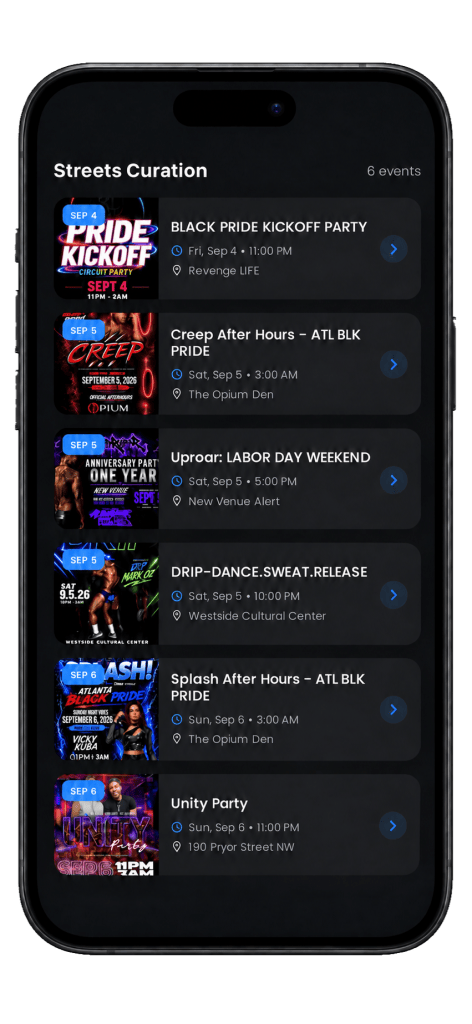
That question became Streets Curations. I built it so different organizers could create a curated list of events, share it with their audiences, and give people a clearer way to explore a full weekend. I wanted to debut it during Atlanta’s Labor Day weekend, September 4–7, 2026.
Bringing a weekend together
A big weekend is bigger than any one event. People want to know what’s happening, decide where they want to go, and share plans with friends. Organizers, meanwhile, are often promoting to overlapping audiences through separate pages.
Curations gave us a way to connect those pieces. Instead of asking guests to find every event on their own, organizers could present a collection that made the weekend easier to discover. It also gave promoters a way to cross-promote one another’s work.
One place to explore events across Atlanta’s Labor Day weekend.
During the Labor Day rollout, I saw wider reach and an increase in sales for the promoters involved. That mattered to me because it showed what could happen when organizers made it easier for their audiences to see the larger experience they were creating together.
The next question came from Revenge Life
Working with curators also brought another problem into focus. Revenge Life raised a question that ticket sales alone can’t answer: What did the event actually earn after its expenses?
A strong sales number can feel great, but producing an event costs money. There may be flyer design, DJ deposits, staff, vendors, and bills that different people cover along the way. If those costs are scattered across messages and spreadsheets, it’s difficult to know the true profit or work out who paid for what.
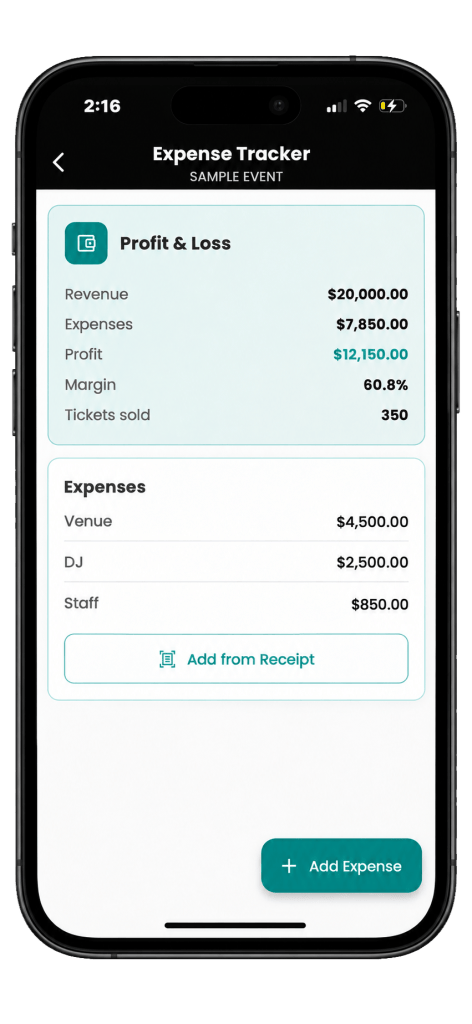
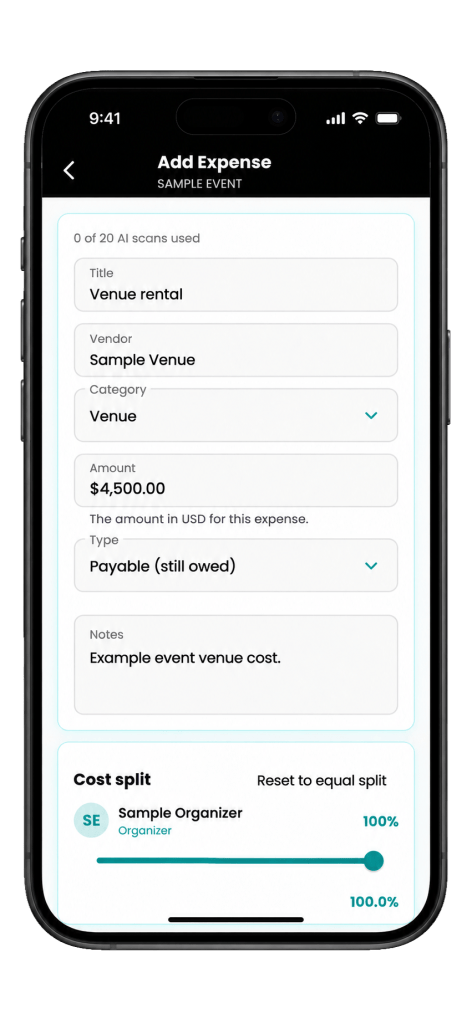
That feedback helped shape the Streets expense tracker. Curators can record costs before tickets sell, see expenses alongside revenue, and estimate their event profit and break-even point. When several people share costs, the tracker can also help them see how those expenses are divided.
Seeing sales and costs together helps curators understand what an event actually earned.
For me, that’s part of building a healthier event business. Curators deserve to know whether an event worked financially, so they can make more informed decisions about the next one.
What’s next for Curations
I’m excited to see organizers take the idea further. Jet Black and Cha Fergie Productions are extending it with another curated list of events for ATL Peach Pride, October 9–11. They’re also pairing the curation with combo tickets, giving guests a way to buy into more of the weekend together.
Jet Black and Cha Fergie Productions are bringing events and combo tickets together for ATL Peach Pride.
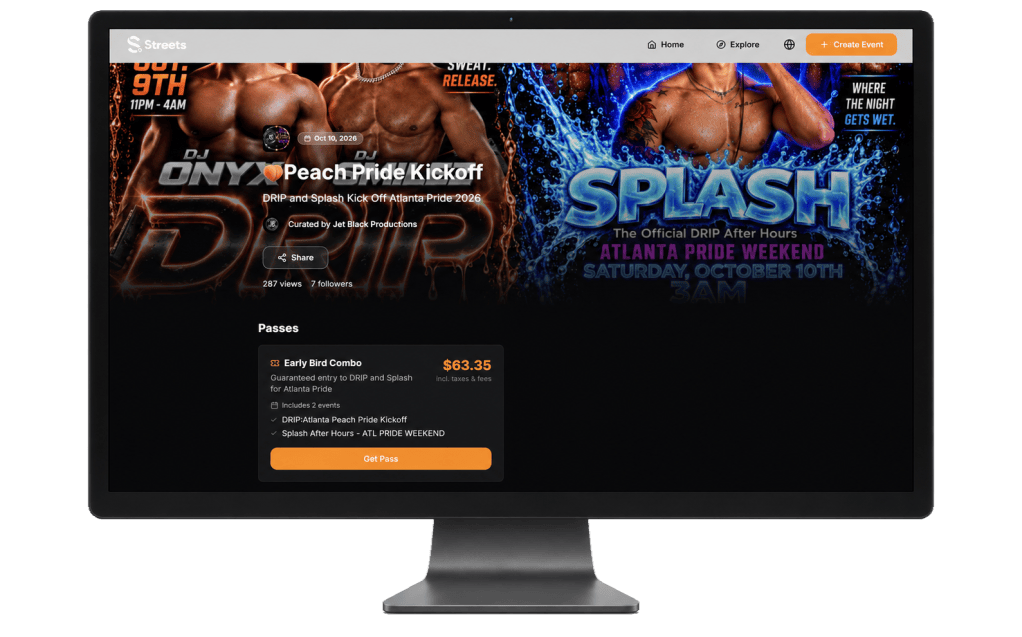
That’s the progression I hoped Curations would make possible: organizers connecting their events, helping each other reach more people, and making it simpler for guests to experience the whole weekend.
Streets Curations started with something I noticed during MLK weekend. Labor Day gave us a chance to put the idea to work. The conversations that followed, especially with Uproar, helped turn another real need into expense tracking.
I’ll keep building Streets that way: alongside the people who create the events and know what it takes to make them happen.
If you’re planning an event, learn more about tracking event expenses on Streets and bringing organizers together through Streets.


Leave a comment